

Management book: The 7 Habits of Highly Effective People

Some lessons stay long after the meetings end.
In my early years, I worked under a CFO named Jerry — a man who could distill complex discussions into a single, guiding phrase. He’d lean back in his chair and say things like, “Robbert, start with the end in mind.” Or “Let’s put first things first.” And always — “Let’s be proactive here.”
At the time, I didn’t realize these weren’t just Jerry’s own mantras.
They came from one of the most influential business and personal development books ever written: Stephen Covey’s The 7 Habits of Highly Effective People.
About the Book
First published in 1989, Covey’s book has become a blueprint for leadership that actually lasts.
It’s not a collection of motivational quotes or management hacks — it’s a framework for how to think, plan, and act effectively in both business and life.
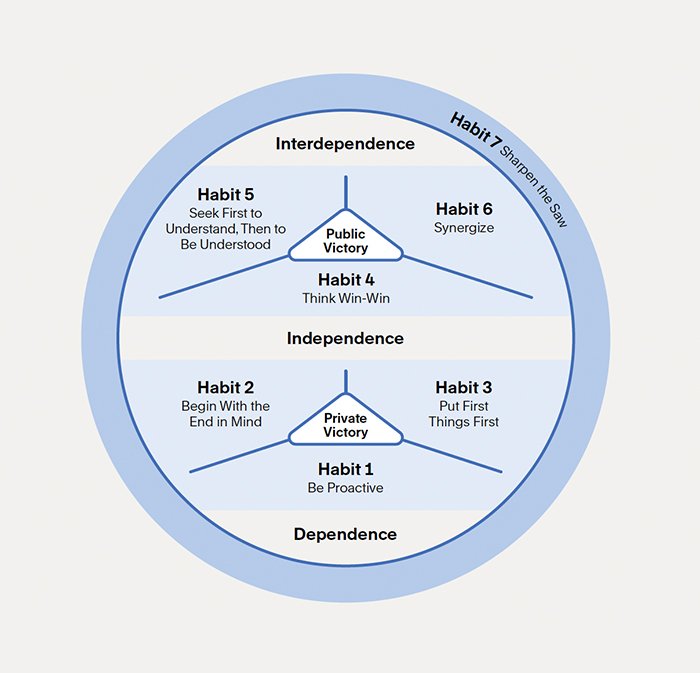
Covey splits the seven habits into three stages of growth:
-
Dependence → Independence → Interdependence.
The idea is simple but powerful: you first learn to lead yourself before you can effectively lead others.
The habits themselves are deceptively simple:
-
Be Proactive
-
Begin with the End in Mind
-
Put First Things First
-
Think Win-Win
-
Seek First to Understand, Then to Be Understood
-
Synergize
-
Sharpen the Saw
Each builds on the last, and together they form a mindset that turns goals into systems, and systems into results.
Why Managers Should Read It
Most management books are tactical — they teach you how to run a meeting, build a dashboard, or manage a budget.
Covey’s is foundational. It’s about character, not checklists.
In finance, reporting, or strategy, technical skill will get you to the table. But what keeps you effective are Covey’s principles:
-
Be proactive — don’t wait for the numbers to tell the story; anticipate what’s coming.
-
Begin with the end in mind — whether it’s a budget, a new business plan, or a transformation project, clarity about the outcome shapes every decision.
-
Put first things first — in a world of endless noise, it’s a reminder to focus on what actually drives value.
These aren’t just leadership slogans; they’re operating systems for thinking. Once they’re part of your mindset, you start to see them everywhere — in how you prioritize, communicate, and even report performance.
Personal Reflection
When I finally read the book years later, it felt like déjà vu.
Every chapter was familiar, like someone had written down the lessons I’d already lived through. That’s the mark of a timeless idea — it feels like it’s been in your head all along, waiting for a name.
Final Thought
If you manage people, projects, or even just your own goals — this book is worth revisiting.
Not for inspiration, but for structure.
Because effectiveness isn’t about doing more. It’s about doing what matters most, on purpose, every time.
Thank you, Jerry, for your wisdom.